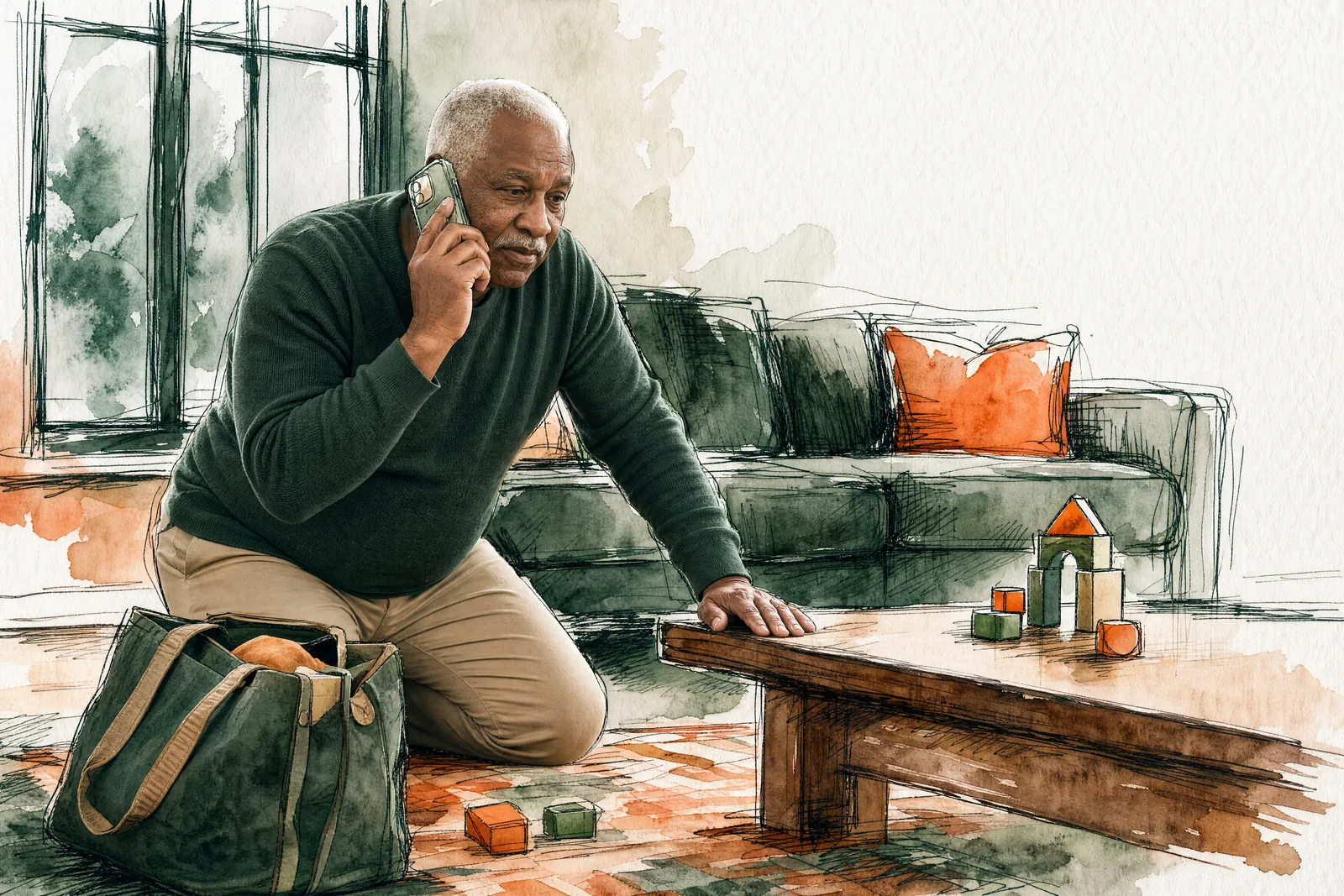
If a child has opened a bag and there is any chance they got into a medicine, a vitamin or another supplement, gummies included, phone Poison Help right away on 1-800-222-1222, even if the child seems fine and you cannot be sure. If the child has stopped breathing or is turning blue, call 911 instead. Poison Help puts you through to your local poison center, where people trained in poisoning answer free and in confidence, 24 hours a day, and you do not need an emergency to use it.
Phoning Poison Help now, or waiting to see whether anything happens
Waiting to see whether anything happens tells you little, because a package without a warning label does not mean the substance in it is safe, and symptoms of poisoning may take time to develop. A familiar bottle or tube with nothing alarming printed on it is no reason to hold off, and neither is a child who is still playing: if you think a child has been poisoned, get help right away and do not wait for a symptom to show.
Stay calm while you dial. Not all medicines, chemicals or household products are poisonous, and not all contact with a poison results in poisoning. You will reach a pharmacist, nurse, doctor or other poison expert who will tell you exactly what to do, and people usually get the help they need over the phone without having to go to a doctor or a hospital. If the child needs more help while you are on the line, Poison Help may stay on the phone with you while you get it.
If the child has trouble breathing, passes out or faints, or is suddenly hard to wake up, too sleepy or confused, call 911 or take them to an emergency department. Those signs need emergency care whatever was in the bag.
Whether the things in the bag are what Poison Help is for
Whatever was in the bag, Poison Help is the number for it. A poison is any substance that is harmful to your body, and any substance can be poisonous if too much is taken. Items that can cause poisoning include pain medicines, cosmetics, personal care products, household cleaning products, and medicines of any kind, prescribed or bought over the counter, which is much of what a handbag or a tote carries.
Vitamins and supplements can poison a child too: many medicines and supplements, including gummies, look like candy, and young children, and even adults, can find it hard to tell the difference. Being sold without a prescription does not make a product safe either, because there are risks in taking any medicine, vitamin or other supplement.
The same number covers a grown-up. Poisoning can happen to anyone, of any age, and the misuse of medicine, whether intentional or not, causes poisonings in teens and adults, including older adults. If an adult in the house took a tablet from the bag that was not theirs, phone Poison Help about them too, and call 911 if they are not breathing.
What to have with you when you phone Poison Help
Have the container in your hand when you phone Poison Help, because its label has important information. When you cannot tell which item the child got into, bring every open bottle, tube and packet from the bag to the phone, with anything loose you found on the floor, and identify the poison if possible.
It may be hard to tell whether the child has indeed been poisoned, so phone Poison Help whether or not you see any signs. As you dial, look for signs to tell the expert about, including a chemical smell on the breath, burns around the mouth, vomiting and unusual odors on the person.
Every poisoning is different, and the treatment advice depends on the type and amount of poison involved and on the child's age, weight and medical history. Have as many of these details ready as you can for the expert on the phone:
- the child's age and weight
- any health conditions or problems the child has
- the product involved
- how the product reached the child, for example by mouth, by breathing it in, or through the skin or eyes
- how long ago it happened
- what first aid has already been given
- whether the child has vomited
- your exact location, and how long it would take you to get to a hospital
If you end up at an emergency department, take the container of the poison substance with you to the hospital, if possible. If you would rather speak a language other than English, ask Poison Help for an interpreter: interpretation services are available in 161 languages.
What not to do before you have spoken to Poison Help
Give the child nothing to eat or drink before you have spoken to Poison Help: if medicine has been swallowed, give nothing by mouth until you have talked to a Poison Help expert. Leave the other home remedies alone too:
| What you might reach for | What to do with it |
|---|---|
| Anything by mouth for a child who is unconscious | Never give it |
| Making the child throw up | Only if Poison Help or a health care provider tells you to, because a strong poison that burns on the way down the throat will also do damage on the way back up |
| Lemon juice, vinegar or any other substance to neutralize the poison | Only if Poison Help or a provider tells you to |
| A "cure-all" type antidote | Do not use one |
| Activated charcoal | Do not use it when you think someone may have been poisoned |
A swallowed medicine, the wrong one or too much of one, is a case where you should not try to give first aid yourself: phone Poison Help, and if anything the expert tells you differs from what is written here, follow the expert.
Keeping the next bag out of a child's reach
Put any bag, purse or coat with medicine in it up high and out of sight whenever a child is in the house, your own included, and ask visitors, babysitters and houseguests to do the same. Store all medicines, cleaners, cosmetics and household chemicals out of reach of children, or in cabinets with childproof latches, and keep medicines out of young children's reach and sight in the fridge too (see Move the weight medicine off the fridge door if young children visit). Teach young children that medicine is not candy and that they should never take medicines on their own.
Save Poison Help, 1-800-222-1222, in your phone before you need it, along with the child's own provider and the emergency department that provider recommends. If you look after a grandchild or a friend's child, ask the parents for those numbers when the child comes to stay, along with the child's age, weight and any health conditions, and keep the child's health information on hand while you are taking care of them. Talk about poisons so that others in the house know what to do, too.
If the bag held your own prescription and your care comes through NicoCares, phone Poison Help before you write to anyone, because NicoCares does not handle emergencies. Once the child is safe, ask the pharmacy you chose to fill that prescription how to store the medicine with children in the house.