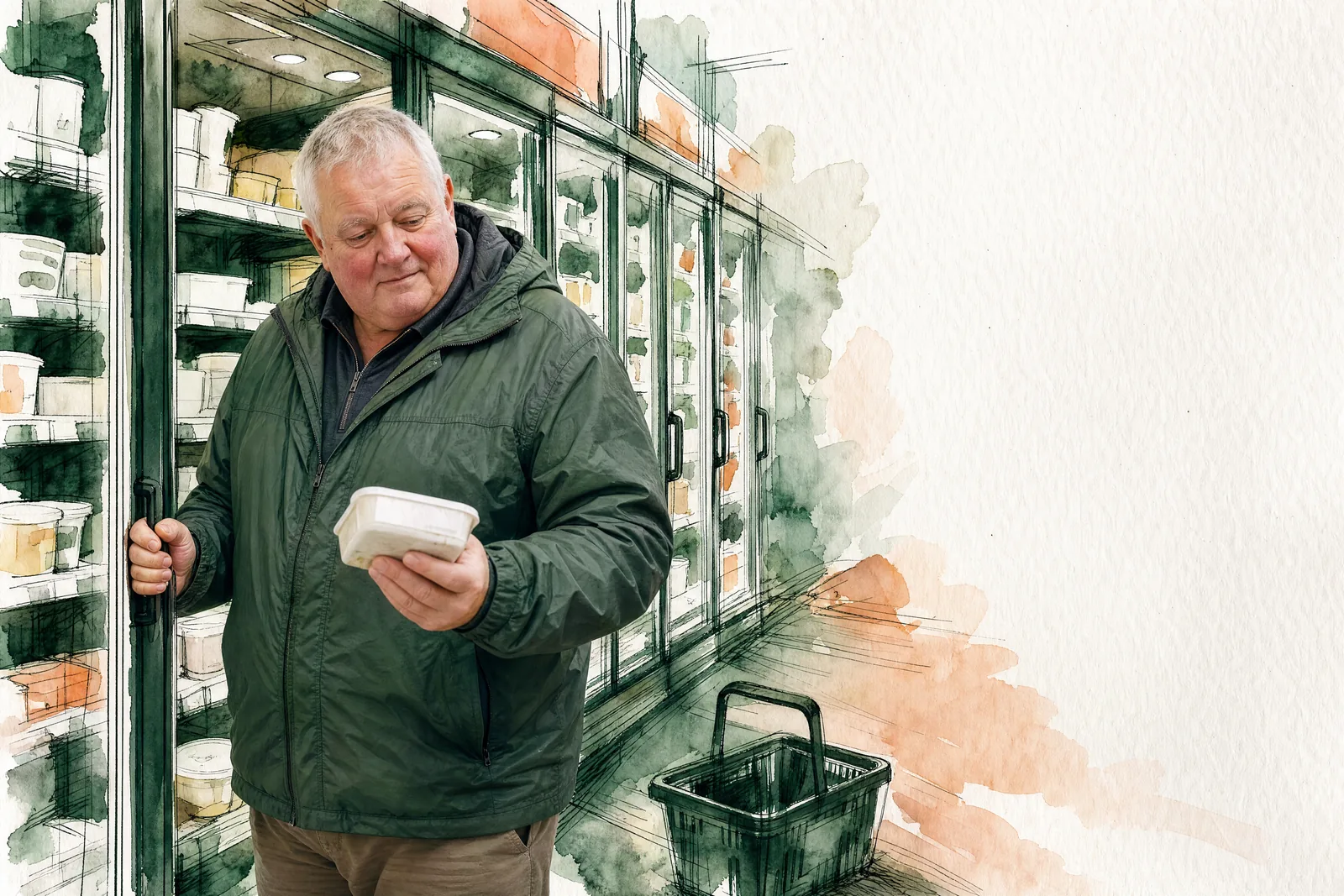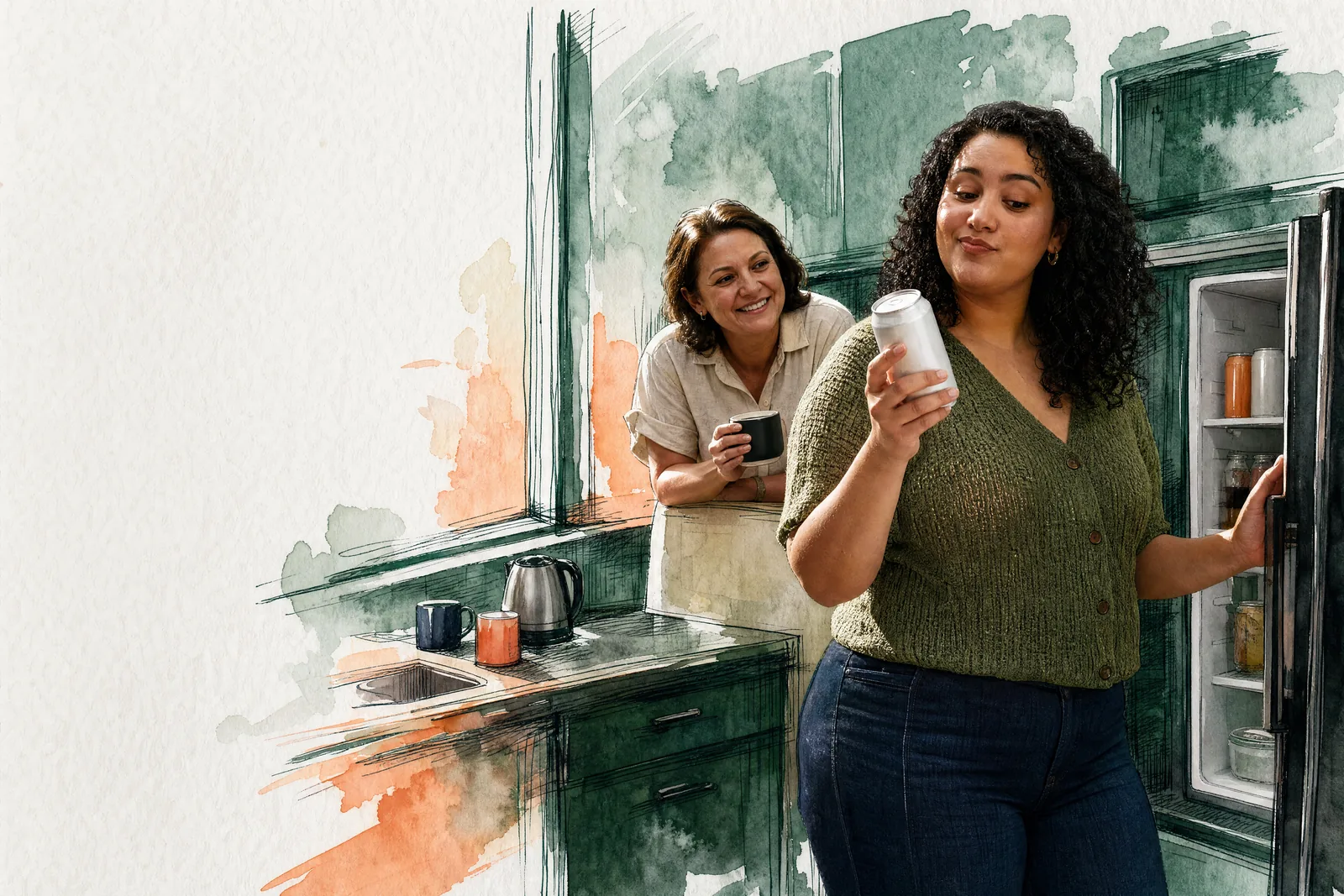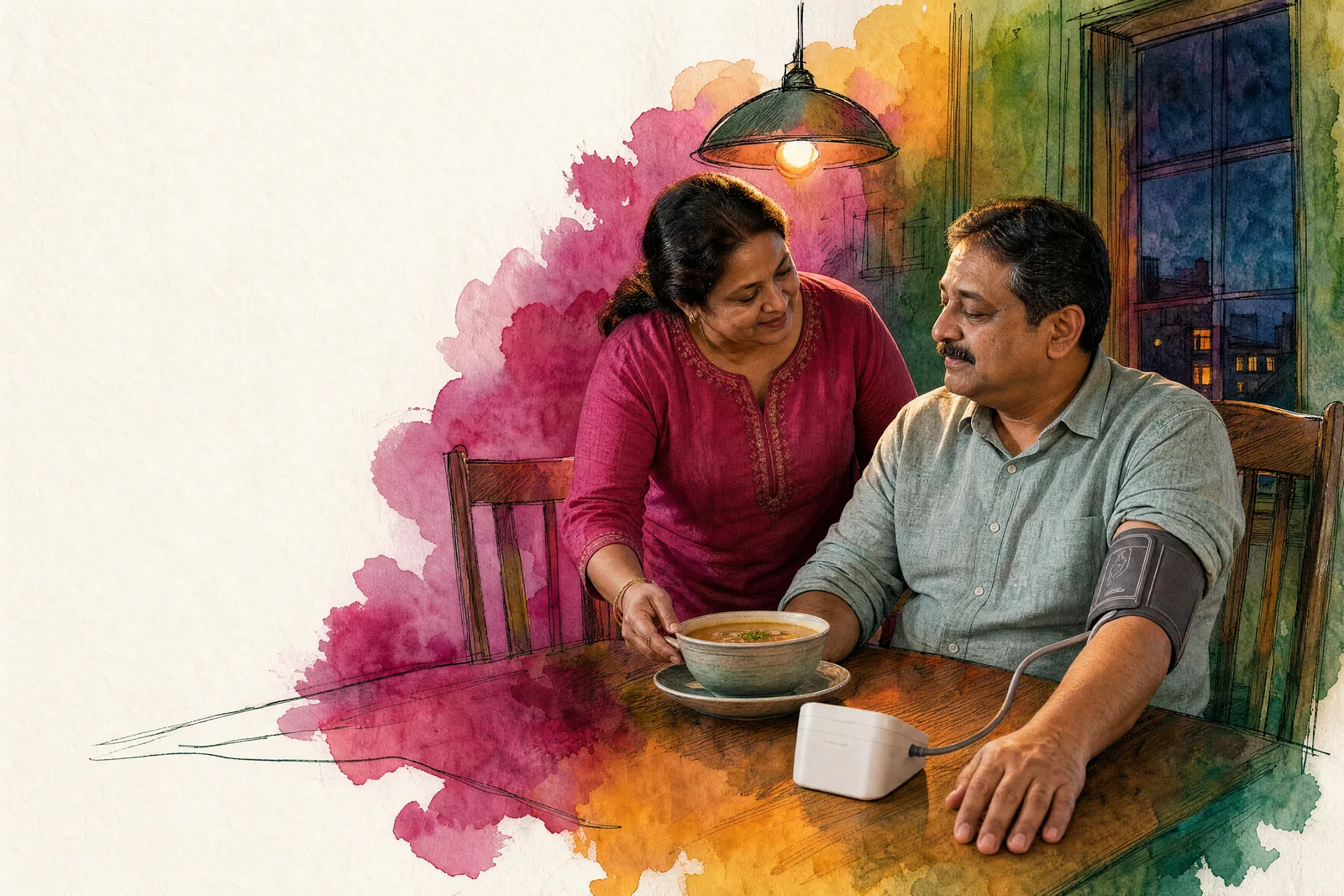
Over 70 percent of the sodium Americans eat comes from packaged and prepared foods, not from table salt added while cooking or at the table. So when you are eating far less than you used to, the sodium in your day depends on which foods are still in it, and a blood pressure cuff at home cannot show you how much of it went with the smaller portions.
Whether salt still matters while your cuff readings hold steady
Too much sodium in the diet may lead to high blood pressure in some people, and to a serious buildup of fluid in people with heart failure, cirrhosis of the liver or kidney disease. If you have one of those three conditions, ask the doctor treating it which signs of fluid buildup to watch for. And because sodium may raise blood pressure in some people and not in others, a steady reading cannot tell you which group you are in, or whether the sodium you eat fell at all.
Where sodium does raise blood pressure, it works through water: a high-sodium diet draws water into the bloodstream, which can increase the volume of blood and, with it, blood pressure. Blood pressure also generally rises as people get older, which makes limiting sodium more important with each year.
How much is too much depends on which of three groups you are in, and the printed limits differ by group: healthy adults should limit sodium to 2,300 mg a day, and adults with high blood pressure should have no more than 1,500 mg a day. People with congestive heart failure, liver cirrhosis or kidney disease may need to consume even lower amounts (see More protein or less when your kidney numbers are flagged?).
For scale, the Daily Value for sodium, the reference amount behind the percentages on food labels, is less than 2,300 mg a day, about 1 teaspoon of table salt, and Americans eat about 3,400 mg a day on average. Which of the three groups above you are in turns on a diagnosis, so ask your own doctor, or the doctor treating one of those three conditions, at your next visit with them. The readings themselves are for your own doctor to interpret, and a log taken the same way every time gives them something to work from (see Why your prescriber needs your home blood pressure log).
Where the sodium in what you still eat comes from
About 40 percent of the sodium Americans eat comes from nine foods:
- deli meat sandwiches
- pizza
- burritos and tacos
- soups
- savory snacks, such as chips, crackers and popcorn
- poultry
- pasta mixed dishes
- burgers
- egg dishes and omelets
Fast foods are generally very high in sodium too.
Those nine are not the only sources: sodium is found in foods from almost all food categories. Breads, rolls and buns, cheese, and meat mixed dishes are also among the top sources for adults. Packaged or processed soups, vegetables and poultry often contain sodium, so look for no- to low-sodium versions of those three.
Some sodium was never added by anyone. Sodium occurs naturally in most foods, including milk, beets and celery, and drinking water contains some too, in an amount that depends on the source. It is also added to many food products in forms whose names do not say salt, among them monosodium glutamate (MSG), baking soda and sodium benzoate, which turn up in items such as soy sauce, Worcestershire sauce and bouillon cubes.
Taste alone is not an accurate way to judge a food's sodium content: pickles and soy sauce taste salty, but cereals and pastries contain sodium without tasting salty.
How much salt went when half the food did
Half the food halves the salt only if the half you dropped carried half of the sodium. Less food does mean less sodium, and smaller portions at home and when eating out cut it. How far your sodium fell depends on which foods shrank, and sodium content can also vary significantly between similar types of foods, so two versions of the same food can count very differently.
If deli sandwiches, canned soup and crackers stayed and the fresh food around them shrank, a larger share of what you eat now comes from the foods that carry most of the sodium, even though the total came down. A food you eat several times a day counts several times: foods such as breads can add up to a lot of sodium over the course of a day, even though a single serving may not be high in it.
To see how much sodium the foods you kept carry, read their labels per serving. The figures on a Nutrition Facts label are usually for one serving, so check the serving size and the number of servings you eat to work out how much sodium you are getting. As a general guide, a serving with 5 percent of the Daily Value for sodium or less counts as low, and one with 20 percent or more counts as high (see Read a food label for half a serving, and compare two packages fairly).
What the sodium words on the front of a package actually mean
Each common sodium claim on a package front has a defined meaning, which is an amount per serving, a difference from the regular product, or, for no salt added, how the food was processed:
| Words on the package | What they mean |
|---|---|
| Salt-free or sodium-free | less than 5 mg of sodium per serving |
| Very low sodium | 35 mg of sodium or less per serving |
| Low sodium | 140 mg of sodium or less per serving |
| Reduced sodium | at least a quarter less sodium than the regular product |
| Light in sodium, or lightly salted | no more than half the sodium of the regular product |
| No salt added, or unsalted | no salt added during processing, but the product may not be salt- or sodium-free unless the package says so |
Salt-free, very low sodium and low sodium cap the sodium in a serving. Reduced sodium and light in sodium compare a food with its own regular version, so a reduced-sodium version of a very salty food can still be a salty food.
Changing what you buy when every packaged food seems salty
Lower-sodium choices at the shop, in the kitchen and at a restaurant:
- Choose fresh meat, poultry and seafood over processed kinds, and check the package on fresh meat and poultry for added salt water or saline.
- Buy vegetables fresh, frozen with no sauce or seasoning, or canned with low sodium or no salt added on the can.
- Rinse canned beans, tuna and vegetables before eating them. That removes some of the sodium, not all of it.
- Pick low-sodium or no-salt-added nuts, seeds and snacks such as chips and pretzels, or carrot or celery sticks.
- Use light or reduced-sodium condiments, oil and vinegar on salads in place of bottled dressing, and only a little of a flavoring packet.
- Buy fewer packaged sauces, mixes and instant products, such as flavored rice, instant noodles and ready-made pasta.
- When eating out, ask for your meal without table salt and for sauces and dressings on the side, and ask whether nutrition information is available.
If you keep to changes like these, your taste for sodium may gradually decrease over time, and eventually you may not even miss it. Your readings may or may not change, and your log is where a change would show. Keep taking the readings the same way, and take the log to your own doctor.
If your smaller meals come with weight care through NicoCares, send the care team any diagnosis of high blood pressure, heart failure, cirrhosis or kidney disease, and the sodium figure that came with it, through Spruce, the app where that team answers you. Your medical history is among the things NicoCares asks about, and the doctor who treats the condition is the one to ask which sodium figure is yours.