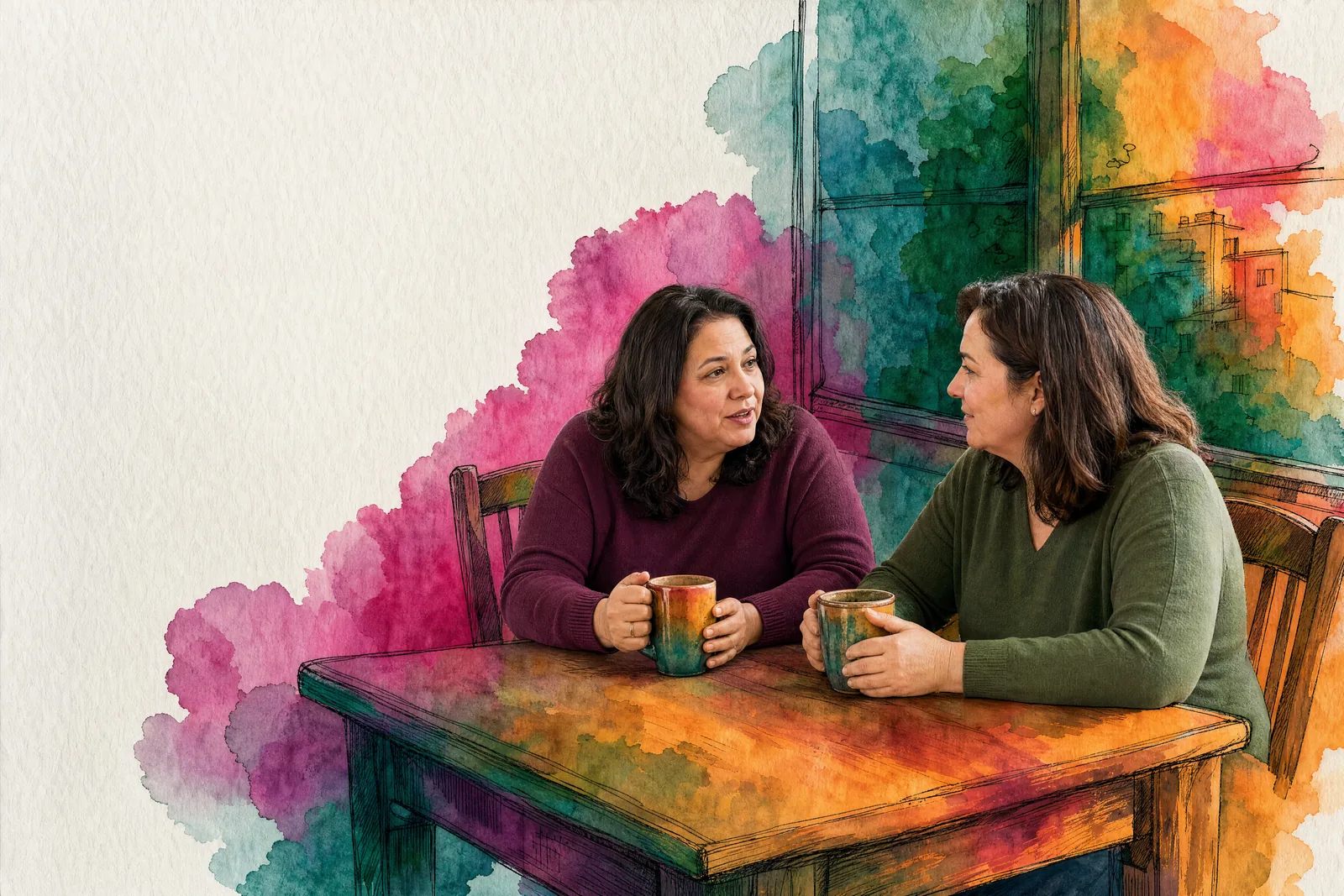
Say your six-year-old daughter has told a friend at school "Mom's not allowed cookies anymore," though nobody in the house ever said it. The same goes for a son, or for a rule about Dad. If you are the parent changing how you eat, she is repeating it at the age when a sense of body image begins developing, around 6, and you can decide what she hears next and which changes in her eating to take to her doctor.
Where a young child picks up a rule nobody said out loud
Young children are good learners and often copy what they see, so if you now pass on the cookies at snack time, buy fewer of them or eat something else while she has hers, she has seen each of those. That copying is also why your own healthy lifestyle choices help her build healthy eating habits.
Through the school-age years peer acceptance becomes more important, and children may take part in certain behaviors to be part of "the group." Talking about these behaviors with her lets her feel accepted in the group without crossing the family's own standards. Wherever the exact words came from, whether school, a screen or another family's kitchen, what she hears about food at home from here on is the part you can change.
What a rule about one food teaches a child
A food rule can teach a child what a food is worth when the food is used as a reward: promising dessert for eating vegetables sends a message that vegetables are less valuable than dessert, so keep food out of rewards and punishments. "Not allowed cookies" is not a reward, but it also sets one food apart, and ties it to one person in the house.
Setting rules and limits with warmth, a parenting style called authoritative parenting, may help children adopt healthy behaviors that support a healthy weight, and children in homes that use it tend to understand rules and still feel comfortable seeking support from their caregivers. Reward her successes with praise and love.
You can also change what is in the kitchen without a rule about anyone. In a family helping a child who is overweight, high-calorie foods and drinks can go out of sight or stop being bought, and a fruit bowl can replace the cookie jar, a change that names no one.
If you are unsure whether the rule should reach her own snacks, ask her doctor. For a child on a weight-loss plan, never allowing any unhealthy snacks or sweets may result in the child sneaking these foods; an unhealthy snack once in a while is OK, and the key is balance and moderation.
Words at home and her risk of an eating disorder
The exact cause of eating disorders is not fully understood; genetic, biological, behavioral, psychological and social factors are thought to act together in a complex way, and in combination they can raise a person's risk. So one sentence at home can be neither named as a cause nor ruled out as one.
Eating disorders frequently appear during the teen years or young adulthood, but people can also develop them during childhood or later in life, and they can affect people of all ages, racial and ethnic backgrounds, body weights and sexes.
Children with overweight or obesity may have a higher risk of developing mental health problems, including low self-esteem, depression and eating disorders, and some of them may experience weight-related teasing or bullying, which can affect their mental health. Both apply to your child only if she carries extra weight.
What to say to her in place of the rule
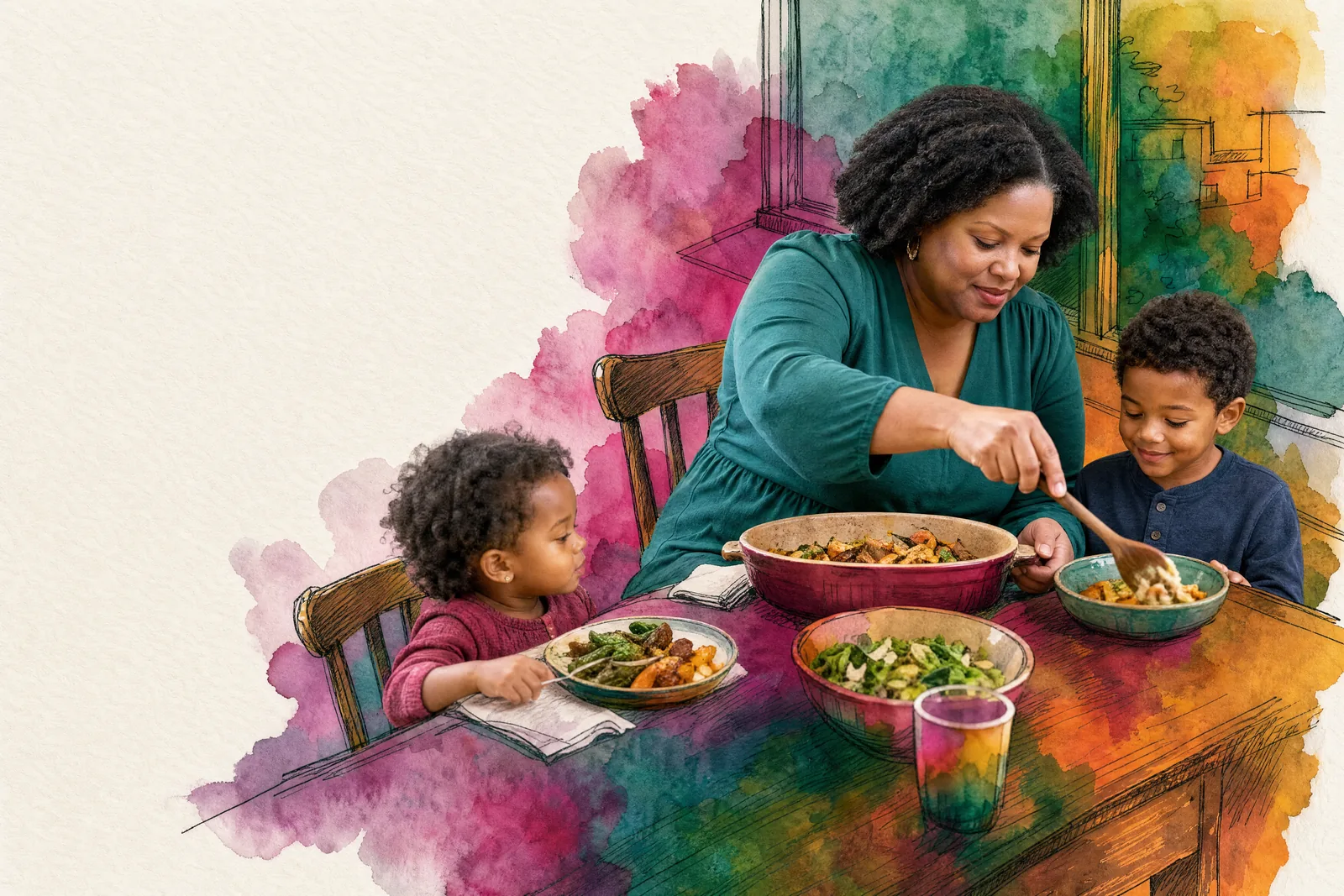
Talk with her about health: how physical activity, healthy eating and enough sleep help "our bodies get strong and stay healthy," how to make healthy choices about food, drinks and activities at school and at friends' houses, and how balancing what "we take in" with how active we are helps "us reach and maintain a healthy weight." Get the whole family involved in building these healthy habits, so everyone benefits and she does not feel singled out.
If your own change is a healthy lifestyle choice, it can stay, because it is the example she copies. What changes is the sentence around it, from a rule about you to talk about health that includes her. If a grandparent or babysitter looks after her, share these lifestyle choices with them so they can help too.
Children's feelings about themselves are often based on how they think their parents and other caregivers feel about them, so tell her she is loved, special and important.
At the table, a family supporting a child on a weight-loss plan can have meals where everyone sits down and talks about the day, with rules such as no lectures or teasing allowed.
If she asks why you eat differently now, the health talk above is the answer, in its own words about what helps "our bodies get strong and stay healthy." At her age, encourage her to express herself openly and talk about concerns without fear of punishment, and a question about your plate is a place to start.
When her eating becomes a question for her doctor
Take it to her doctor when what changes is how she eats, beyond what she says. Many people worry about their health, weight or looks now and then; a fixation on losing weight, on body weight or shape, or on controlling food may be a sign of an eating disorder. Signs include:
- eating alone or in secret to avoid embarrassment
- dieting frequently, possibly without weight loss
- severe restriction of the types or amount of food eaten
- a limited range of preferred foods that becomes even more limited, "picky eating" that gets progressively worse
- dramatic weight loss
Someone showing any combination of these symptoms may have an eating disorder, and early detection and treatment are important for recovery, so if you see them in her, phone her doctor's office and ask for an appointment. You can call her doctor even if you have seen none of these signs: because eating disorders can be so serious, it is important to seek help if you or a loved one thinks there might be a problem. A worry about her weight is one for her doctor too, and never put her on a weight-loss plan without the help of her doctor (see Your teenager asked about a weight medicine. It is a question for her doctor).
If what worries you is your own eating, talk to a primary care provider, who can refer you to a qualified mental health professional such as a psychologist, psychiatrist or clinical social worker.
Whether it is you or someone you know who is struggling or thinking of suicide, call or text 988 for the Suicide and Crisis Lifeline, or chat at 988lifeline.org, and call 911 in a life-threatening situation.
NicoCares care is only for people 18 or older, so your child's eating is a question for her own doctor. If your own change in eating is part of NicoCares care, your plan is a question for your care team, who answer patients in Spruce, a secure messaging app. A reply there has no promised time, so a crisis goes to the numbers above, not to a message.