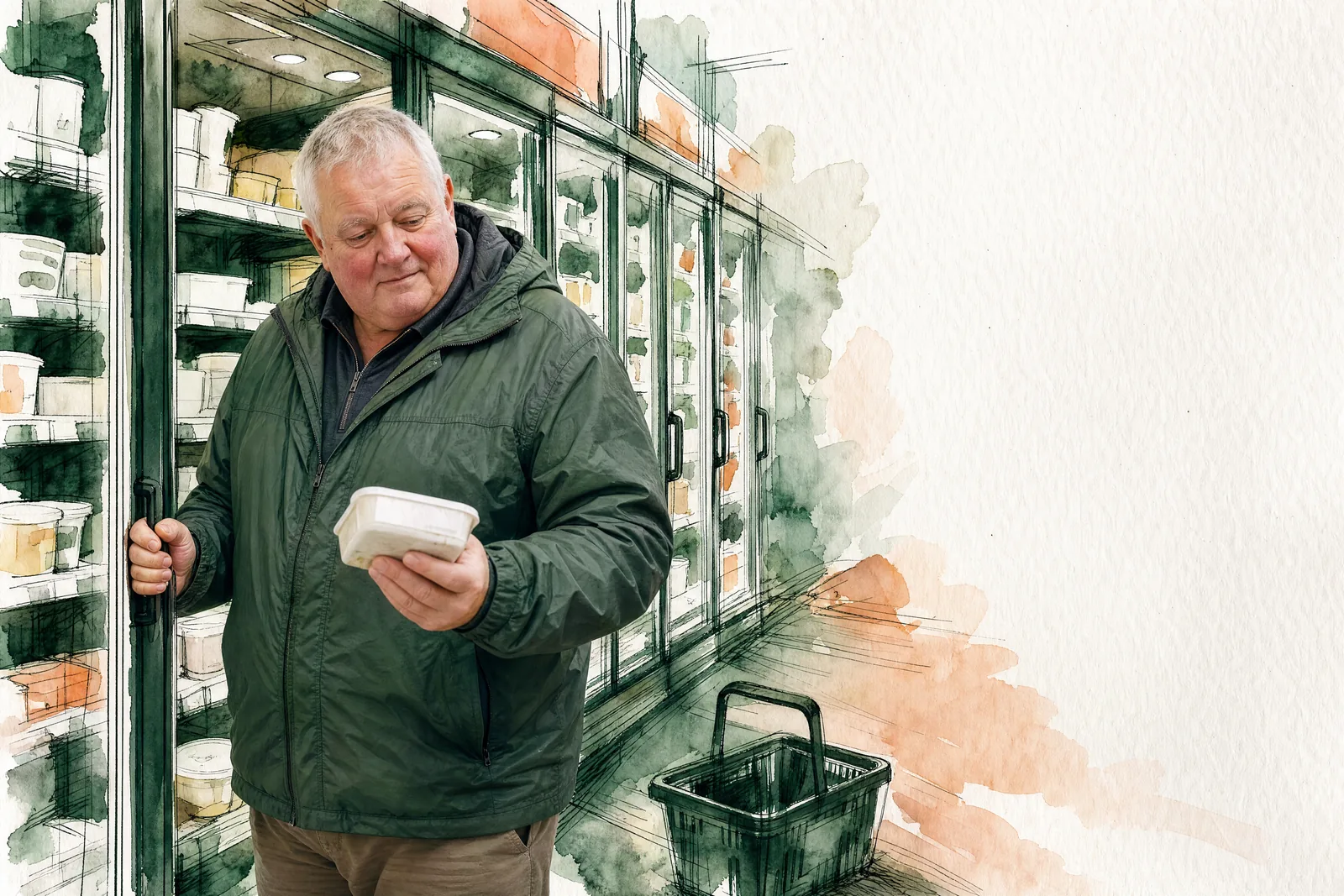
A tub of yogurt two days past the date on its lid may still be safe to eat. A use-by date is the manufacturer's recommendation for the best flavor or quality, not a food safety date. Infant formula and some baby foods are the exception: they must be used by the use-by date on the package.
Why the maker printed a date on the tub
The company that made the yogurt printed the date, and it chose to: manufacturers apply date labels at their own discretion, most often to tell shoppers and stores how long the food can be expected to keep its intended quality and flavor. Except on infant formula, no federal law or regulation requires a quality date on packaged food, and the United States has no uniform or universally accepted wording for one, so the phrase beside the date varies from one package to the next. Food makers are moving toward more uniform labels, and Best if Used By is the phrase FDA supports as the standard way to mark when a product will be at its best flavor and quality.
| Words beside the date | What they tell you |
|---|---|
| Best if Used By | When the product will be at its best flavor and quality |
| Use by | The manufacturer's recommended date for the best flavor or quality, which is not a food safety date, except on infant formula and some baby foods, which must be used by it |
| Sell By, Best By, Expires on, and other phrases | Wording each manufacturer chooses, with no uniform or universally accepted meaning in the United States |
If you have a question about the quality, safety or labeling of one particular product, contact the company that produced it: many packaged foods give the company's contact information on the package.
Is the food unsafe once its date has passed?
Apart from infant formula and some baby foods, a passed use-by date does not by itself tell you the food is unsafe: a product may be wholesome and safe long after that date, although at some point after it the taste, color, texture or nutrient content may change. Whether a particular tub is still safe depends in part on how it has been stored, and for how long.
Past a Best if Used By date, examine the food for signs of spoilage, such as a noticeable change in its color, consistency or texture. If you are not sure, or if the food looks questionable, throw it out.
How storage affects whether food stays safe
How food has been stored is one of the things that decides whether it is still safe: keeping food chilled at proper temperatures is one of the best ways to prevent or slow the growth of the bacteria that cause foodborne illness. Keep the refrigerator at or below 40°F (4°C) and the freezer at 0°F (-18°C), and never leave meat, poultry, seafood, eggs, produce or any other food that needs refrigeration at room temperature for more than two hours, or one hour if the air is above 90°F. The same limit covers leftovers, doggie bags and take-out food, and if something that needed the fridge sat out longer than that, it is usually best to throw it out.
Read the storage directions on a label as closely as the date, because many items besides meat, vegetables and dairy need to be kept cold. An appliance thermometer is the best way to know your fridge and freezer temperatures, and one is generally inexpensive. Put one in the fridge and one in the freezer, at the front where it is easy to read, and check them at least once a week.
If the power goes out, keep the fridge and freezer doors closed as much as possible. Refrigerated food should be safe if the power was out for no more than four hours and the door stayed shut; throw out any refrigerated perishable food, such as meat, poultry, fish, milk, eggs or leftovers, that sat above 40°F for four hours or more.
Refrigerated ready-to-eat foods, such as lunch meats, are best used as soon as possible: the longer they are stored in the fridge, the more chance Listeria, a bacterium that causes foodborne illness, has to grow, especially if the fridge runs above 40°F (4°C). Keep food in the fridge in covered containers or sealed storage bags, and check leftovers every day for spoilage.
Most food you will not get to before it spoils can wait in the freezer instead. Food that is properly handled and kept at 0°F (-18°C) stays safe, because freezing stops bacteria from growing, although it does not kill most of them, and its quality declines the longer it stays frozen (see How to stop throwing out groceries that spoil before you eat them).
To find how long a particular food keeps in the pantry, the fridge or the freezer, look it up in the FoodKeeper, a guide that covers virtually every food available in the United States.
What looking at and smelling the food can tell you
Looking at food and smelling it can tell you to throw it out, but neither can show that it is safe. Throw out anything that looks or smells suspicious. Mold is a sign of spoilage and can grow even in the fridge. Although it is not a major health threat, the safest practice is to discard food that is moldy.
A clean smell is no proof of safety, because food can make you very sick even when it does not look, smell or taste spoiled. The bacteria that cause foodborne illness are different from the spoilage bacteria that make food go bad, so the fridge temperature and the two-hour limit count even for a tub that smells fine.
A can is damaged if it is swollen, leaking or deeply and extensively rusted, if it has punctures, holes or cracks, or if it is crushed or dented so badly that it will not stack normally or open with a manual, wheel-type can opener; a sticky outside may mean a leak. Return a newly bought can that seems to be leaking to the store for a refund or exchange, and throw away any other damaged can.
The date is still worth reading in the grocery store, before the food is yours to store. Check packages to be sure the food has not reached its expiration date, and pass over cans that are bulging and jars with cracks or loose lids.
When the food has already made you sick
If food you ate makes you ill, most of the time you will get better in a couple of days, and most people fully recover from the most common types of food poisoning within 12 to 48 hours. Symptoms from those common types often start within 2 to 6 hours of eating the food, though the time may be longer or shorter depending on the cause.
Dehydration is the most common complication, and one goal of treatment is to make sure your body has the proper amount of fluids. An oral rehydration mixture, sold as a powder at pharmacies and mixed with safe water, replaces the fluids and minerals lost through vomiting and diarrhea. Before you take a drugstore medicine to slow diarrhea, talk to your doctor if you have bloody diarrhea, a fever or severe diarrhea, and do not give these medicines to children.
Food poisoning from mushrooms or from botulism is potentially fatal. If you suspect botulism, get to an emergency room or phone 911; its symptoms often appear 8 to 36 hours after eating, and in adults may include double vision, difficulty swallowing and speaking, and breathing difficulty. If you think you may have eaten a poisonous mushroom, call the Poison Help line at 1-800-222-1222 right away, without waiting for signs of poisoning; it connects you to your local poison center, and if someone who ate it is not breathing, call 911.
Call your own doctor's office about food poisoning with problems like these:
- blood or pus in your stools
- diarrhea, with nausea and vomiting that stop you drinking fluids
- a fever above 101°F (38.3°C)
- signs of dehydration: thirst, dizziness or lightheadedness
- diarrhea that has not gotten better in 5 days, or has gotten worse
- fish or other seafood as its cause
For a child the limits are lower: call the child's doctor's office for a fever above 100.4°F (38°C) along with diarrhea, diarrhea that has not gotten better in 2 days or has gotten worse, or vomiting for more than 12 hours, and for a baby under 3 months as soon as vomiting or diarrhea begins.
Phone your own doctor's office about anything on that list even if you get your weight care through NicoCares, because the NicoCares care team answers messages in Spruce, a secure messaging app, with no set reply time. Tell the care team there about the illness promptly as well: changes in your health are among the things to report to them, and your physician may change or stop treatment when they judge it appropriate.